



At a moment when Syria is once again being pushed towards large-scale instability, North and East Syria has become the focal point of renewed conflict, political breakdown, and humanitarian crisis. Despite multiple agreements and declared ceasefires, military offensives have intensified, threatening not only local communities but also regional and global security—particularly with the possible resurgence of the Islamic State.
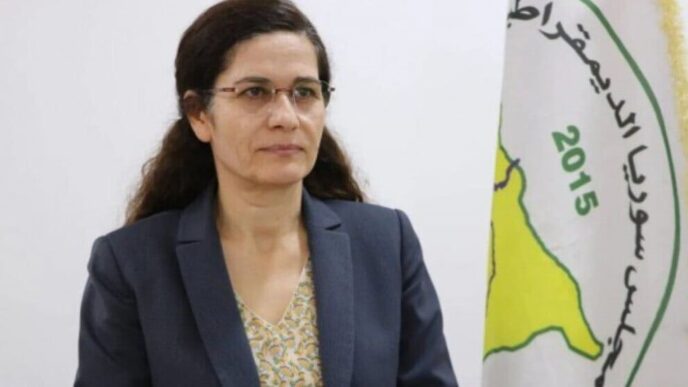
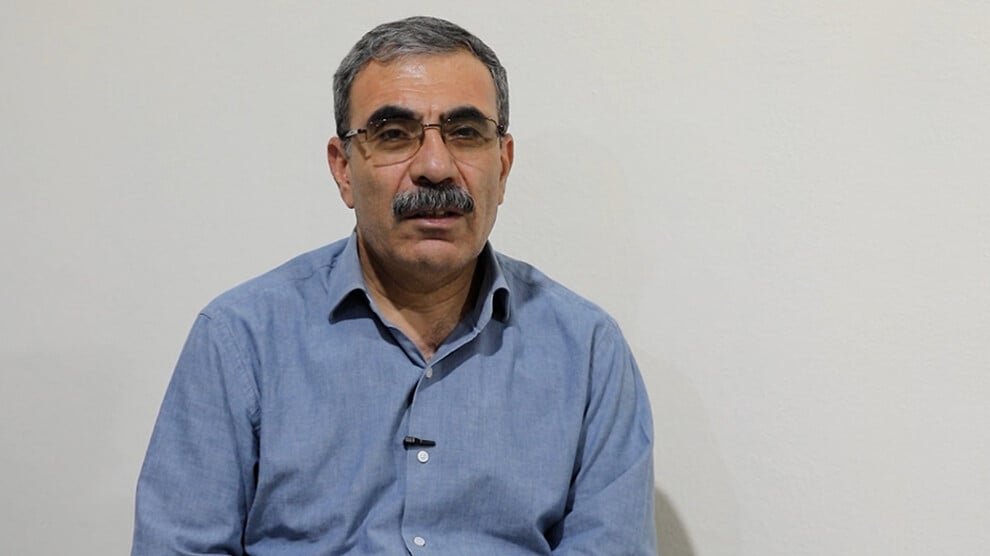
In this interview with the Times of Global South, Aldar Xelil, a senior leader of the Democratic Union Party (PYD), speaks in detail about the collapse of dialogue with the Syrian Interim Government, the role played by Turkey, the humanitarian siege of Kurdish-majority areas, and the dangers of sectarian fragmentation. He also outlines what he believes is required to restore peace and why the international community must act decisively before Syria slips into irreversible disintegration. Here is the Full Interview:
What is the background of the attacks on North and East Syria? Why did they begin on the very day negotiations were supposed to take place?
Aldar Xelil: The attacks did not begin suddenly or accidentally. They are the result of a long process of broken promises and deliberate obstruction by the interim government in Damascus. After the fall of the Baath regime, we entered a dialogue process in good faith. On March 10, 2025, we signed an eight-point agreement that covered administration, state institutions, and military arrangements. However, from the very beginning, the interim government avoided implementing this agreement.
Although they publicly claimed commitment, in practice they delayed every step. Even agreements specific to places like Sheikh Makhsood in Aleppo were ignored. Instead of easing restrictions, they imposed embargoes, blocked roads, and cut off basic supplies. When negotiations resumed in January, they tried to isolate only the military aspect of the agreement, ignoring political and administrative points.
When we finally reached an understanding on military integration and waited for formal signing, they postponed again—and shortly after, military attacks began. This clearly shows that negotiations were used as a tactic to gain time, not to achieve peace.
Given repeated failures to implement agreements, is there still any trust left in dialogue with Damascus?
Aldar Xelil: Trust has been deeply damaged, but we have not abandoned dialogue because the alternative is endless war. However, dialogue cannot continue without guarantees. What we have experienced so far shows that verbal commitments mean nothing unless there is international oversight and pressure.
If future talks are to succeed, agreements must be implemented simultaneously and transparently, not selectively. There must also be mechanisms to monitor compliance. Without these, dialogue risks becoming merely a cover for military escalation.
Do you believe the interim government deliberately used negotiations as a cover while preparing military offensives?
Aldar Xelil: Yes, that is our clear assessment. Their behavior shows a consistent pattern: talks, delays, false commitments, followed by attacks. Even ceasefires were declared and then violated within hours. This is not the behavior of a government seeking stability; it is the behavior of armed groups that still operate with a gang mentality.
How prepared are the SDF and local forces for a prolonged conflict if attacks continue?
Aldar Xelil: The SDF and local security forces are experienced and capable of defending the population. We defeated the Islamic State under far more difficult circumstances. However, our goal has never been to prepare for endless war. Every resource spent on fighting is a resource taken away from rebuilding society.
We are prepared defensively, but our strategic priority remains political resolution, not military expansion.
Is there a risk that restraint could collapse if attacks intensify?
Aldar Xelil: Restraint is becoming increasingly difficult, especially when civilians are targeted and cities are besieged. Still, we are consciously avoiding actions that could close the door to peace. If restraint collapses, it will not be because we want war, but because we are forced to protect our people.
What role has Turkey played in these attacks?
Aldar Xelil: Turkey plays a direct role through armed groups it previously trained and supported. These groups now operate under the name of the Syrian army, but their structure, personnel, and methods are familiar to us from earlier conflicts in Afrin, Serêkaniyê, and Girê Spî.
Turkey also provides intelligence, drone support, and surveillance. This involvement deepens the conflict and undermines any chance of a peaceful settlement.
How do you view the contradiction between Turkey’s peace process with Kurds at home and its actions in Syria?
Aldar Xelil: This contradiction is very dangerous. Peace in Northern Kurdistan cannot succeed while war is fuelled in Syria. Stability is interconnected. If Turkey genuinely wants peace, it must abandon military solutions and adopt dialogue-based approaches on both sides of the border.
What is the current humanitarian situation on the ground?
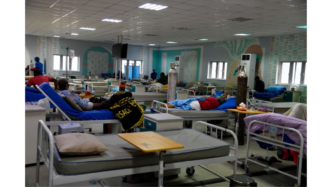
Aldar Xelil: The humanitarian situation is extremely severe. Cities like Kobanê are under complete siege. Roads are blocked, electricity and water are cut, and medicine and fuel are unavailable. Civilians are suffering not only from military attacks but from systematic deprivation.
What makes this worse is the brutality of the armed groups involved—executions, torture, and attacks on civilians are widespread. These are crimes against humanity.
Is there a risk of ethnic or sectarian conflict being deliberately provoked?
Aldar Xelil: Yes, and this is one of the most dangerous aspects of the current escalation. Kurdish villages are targeted while Arab villages are spared, clearly aiming to create mistrust and hatred. For 15 years, we have built coexistence among Kurds, Arabs, Syriacs, Armenians, and others. Destroying this unity appears to be a deliberate objective.
How does this escalation threaten Syria’s unity?
Aldar Xelil: Syria cannot be unified by force or by suppressing diversity. Unity comes from recognition, equality, and shared destiny. What the interim government is doing—marginalising Alawites, Druze, Kurds, and Christians—is pushing the country toward fragmentation.
What impact could the release of IS prisoners have on global security?
Aldar Xelil: The release of IS prisoners is a global threat. We kept these individuals contained and prevented their reorganisation. Now, their release risks rebuilding IS with greater hatred and international reach. This is not just Syria’s problem; it threatens Europe, the US, and beyond.
What immediate steps are necessary to restore stability?
Aldar Xelil: First, all attacks must stop, and ceasefires must be respected. Second, dialogue must resume under international supervision. Third, diversity must be recognised as a strength, not a threat. Only then can we build a democratic Syria.
What role should the international community play?
Aldar Xelil: The international community must decide whether it truly supports democracy and human rights. Silence and inaction only empower extremists. Pressure must be applied on the interim government to respect all communities and return to political solutions.
What is your final message to the world?
Aldar Xelil: Until the Kurdish issue and the issue of democracy are resolved, there will be no stability in Syria. Peace is possible, but only if the world stops tolerating oppression and supports genuine democratic transformation.